
Nepal Trekking
Nepal trekking is one of the world’s most diverse Himalayan adventure experiences, combining spectacular mountain scenery, high-altitude trails, traditional villages, Buddhist and Hindu culture, protected landscapes and close interaction with local communities. From the internationally famous Everest Base Camp Trek to remote journeys in Dolpo, Kanchenjunga and Makalu, Nepal offers trekking routes for beginners, experienced hikers and serious high-altitude adventurers.
Nepal Tourism Board notes that many trekking routes range between approximately 1,000 and 4,000 metres, while popular sections of some routes exceed 5,000 metres. Everest, Annapurna and Langtang have traditionally been among Nepal’s most popular trekking regions, while destinations such as Kanchenjunga and Dolpo offer more remote experiences.
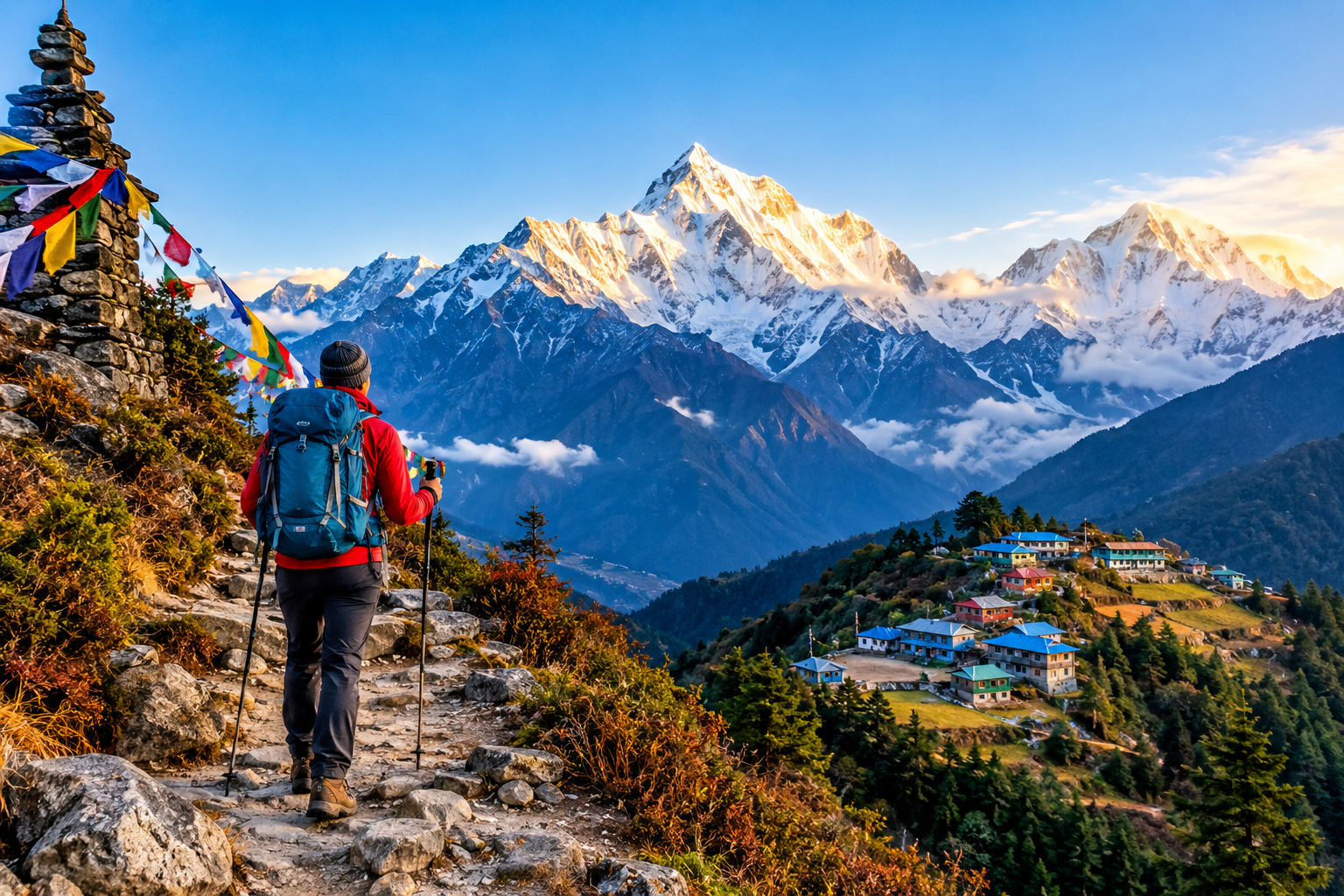
This complete guide explains Nepal trekking packages, routes, itineraries, costs, difficulty, permits, seasons, guides and preparation so you can choose a trek according to your time, experience, budget and fitness.
What Is Nepal Trekking?
Nepal trekking means travelling through Nepal’s Himalayan, mountain and hill regions primarily on foot, usually following established trails between villages, settlements, viewpoints, mountain passes, valleys and base camps.
A trekking journey can range from a relatively short Nepal hiking and trekking experience of several days to a demanding multi-week expedition through remote Himalayan terrain.
Unlike mountaineering, most trekking routes do not require technical climbing skills. However, some high-altitude treks involve difficult terrain, long walking days, steep passes and significant altitude gain. Routes such as the Three High Passes, Manaslu Circuit, Upper Dolpo and certain Kanchenjunga itineraries therefore require considerably more preparation than shorter lower-altitude hikes.
Best Treks in Nepal
Nepal has an extensive network of trekking routes. The right trek depends on your available time, fitness, experience, desired altitude and preferred environment.
| Trek | Typical Duration & Details |
|---|---|
| Everest Base Camp | 12–16 days • Challenging • Everest and Khumbu |
| Three High Passes | 18–22+ days • Very challenging • High passes and Everest region |
| Annapurna Circuit | 12–18 days • Moderate–Challenging • Diverse landscapes and Thorong La |
| Manaslu Circuit | 14–18 days • Challenging • Remote Himalayan scenery |
| Langtang Valley | 7–10 days • Moderate • Mountains, villages and valley |
| Upper Mustang | 12–16 days • Moderate–Challenging • Trans-Himalayan landscape |
| Kanchenjunga | 18–24+ days • Challenging • Remote eastern Himalaya |
| Makalu Base Camp | 20–24+ days • Very challenging • Makalu and remote terrain |
| Dolpo | 18–30+ days • Challenging–Very challenging • Remote western Nepal |
| Peak Climbing | Varies • Technical/Very challenging • Himalayan climbing |
Duration varies according to route, itinerary, acclimatisation days, transportation and trekking conditions.
Everest Base Camp Trek
The Everest Base Camp Trek is one of the world’s best-known Himalayan trekking journeys. The route passes through the Khumbu region and traditionally involves Lukla, Namche Bazaar, Tengboche, Dingboche, Lobuche and Everest Base Camp, with acclimatisation built into the itinerary.
It is an excellent choice for travellers who want a classic Nepal Himalayan trekking experience without attempting to climb Mount Everest.
Three High Passes Trek
The Three High Passes route is considerably more demanding than the standard Everest Base Camp itinerary. It combines major high passes with Everest-region valleys and viewpoints.
Because of its altitude, length and challenging terrain, it is better suited to experienced trekkers with appropriate acclimatisation and preparation.
Annapurna Circuit Trek
The Annapurna Circuit is known for its geographical and cultural diversity. Depending on the itinerary, trekkers encounter subtropical valleys, high mountain landscapes, Tibetan-influenced settlements and the Thorong La area.
Its accessibility and varied scenery make the Annapurna region one of the major destinations for trekking in Nepal.
Manaslu Circuit Trek
The Manaslu Circuit travels around Mount Manaslu through increasingly high and remote Himalayan terrain. It offers mountain scenery, traditional villages and the challenging Larkya La crossing.
The Manaslu region is also a regulated trekking area, so trekkers should arrange the appropriate permits and guide requirements before departure.
Langtang Trek
Langtang is comparatively accessible from Kathmandu and provides a shorter route into the Himalayan environment. It can be suitable for travellers who have less time but still want mountain scenery, villages and high-altitude trekking.
Upper Mustang Trek
Upper Mustang is a distinctive trans-Himalayan destination characterised by dry landscapes, cliffs, caves, monasteries and Tibetan-influenced culture.
It is a restricted area, meaning foreign trekkers need a special trekking permit and must follow the applicable regulations. Nepal’s Department of Immigration currently lists Upper Mustang at USD 50 per person per day.
Kanchenjunga Trek
Kanchenjunga trekking takes travellers into eastern Nepal around the world’s third-highest mountain. The region is remote and involves longer itineraries, significant altitude variation and fewer services than heavily visited trekking corridors.
Makalu Base Camp Trek
Makalu Base Camp is a demanding journey through the Makalu-Barun region. Nepal Tourism Board describes the southern route as one of Nepal’s tougher trekking routes and recommends it for experienced trekkers.
Dolpo Trekking
Dolpo offers some of Nepal’s most remote trekking experiences, including dramatic high-altitude landscapes and traditional Himalayan communities. Upper and Lower Dolpo involve special regulations and permits, so itineraries should be organised with an appropriately registered trekking agency.
Peak Climbing in Nepal
Peak climbing goes beyond conventional trekking. Technical skills, climbing equipment, permits and specialised support may be required depending on the peak. Nepal Tourism Board states that larger mountain permits are issued through the relevant government authority, while the Nepal Mountaineering Association handles permits for designated trekking peaks.
Nepal Trekking Packages and Tours
Nepal trekking packages normally combine some or all of the services required to complete a trekking itinerary. Depending on the operator and route, a package may include:
- Airport transfers
- Kathmandu accommodation
- Domestic transportation or flights
- Trekking guide
- Porter service
- Accommodation during the trek
- Meals according to the package
- Required permits
- TIMS arrangements where applicable
- Conservation or protected-area entry fees
- Government taxes
- Emergency assistance
Before booking Nepal trekking tours, compare exactly what is included and excluded rather than comparing only the advertised price.
A private trekking in Nepal package generally provides greater flexibility in itinerary and group composition, while group trekking in Nepal can be suitable for travellers who prefer a shared experience and potentially lower per-person costs.
Nepal Trekking Routes and Itineraries
A good Nepal trekking itinerary should balance walking distance, elevation gain, acclimatisation, and rest.
For example, a high-altitude itinerary should not simply maximise kilometres each day. Proper acclimatisation is an important part of altitude management.
A typical Everest Base Camp itinerary may include:
Kathmandu → Lukla → Phakding → Namche Bazaar → Tengboche → Dingboche → Lobuche → Everest Base Camp → return toward Lukla → Kathmandu
Other routes follow completely different geographical and cultural environments.
For a remote trekking experience in Nepal, routes such as Kanchenjunga, Dolpo and Makalu generally require more logistical planning than established routes around Everest, Annapurna or Langtang.
Nepal Trekking Cost and Price
There is no single Nepal trekking cost because the total price depends on the route, duration, accommodation, transportation, guide and porter services, permits, season and level of service.
A useful way to estimate Nepal trekking price is to divide expenses into:
- International flights
- Nepal visa
- Kathmandu accommodation
- Domestic flights or road transportation
- Trekking package
- Guide and porter
- Trekking permits and entry fees
- Food and accommodation
- Travel insurance
- Personal equipment
- Tips and personal expenses
Restricted-area permits can substantially affect the budget. For example, Nepal’s Department of Immigration currently lists different seasonal permit fees for Manaslu, while Upper Mustang and Upper Dolpo have significantly higher restricted-area permit costs.
Therefore, a low-cost short trek and a multi-week remote Himalayan trek should not be expected to have comparable prices.
Nepal Trekking Difficulty
Nepal trekking difficulty depends on several factors rather than altitude alone.
Important factors include:
- Trek duration
- Maximum altitude
- Daily elevation gain
- Trail conditions
- High passes
- Weather
- Walking hours
- Availability of accommodation
- Remoteness
- Your physical preparation
- Previous trekking experience
For beginners, shorter and lower-altitude routes can provide an easier introduction to trekking. Langtang, shorter Annapurna-area routes and selected lower-altitude trekking itineraries can be considered depending on fitness and conditions.
Experienced trekkers may choose Everest Base Camp, Annapurna Circuit or Manaslu, while high-pass and remote routes require greater preparation.
Best Time for Nepal Trekking
The best time for Nepal trekking depends on the region and route, but spring and autumn are traditionally considered the main trekking seasons.
Nepal Tourism Board identifies spring and autumn as the best general periods for trekking, with spring known for rhododendron blooms and autumn offering clearer post-monsoon conditions.
Spring: March–May
Spring offers warmer conditions at lower elevations and blooming rhododendrons in many areas. It is a popular period for mountain trekking.
Autumn: September–November
Autumn is traditionally one of the busiest trekking seasons. October and November often provide excellent mountain visibility after the monsoon.
Winter: December–February
Winter can bring cold temperatures, snow and difficult high passes. Lower-altitude treks may remain practical, but high-altitude itineraries require careful route and weather planning.
Monsoon: June–August
The monsoon affects much of Nepal with rainfall and cloud cover. However, rain-shadow destinations such as parts of Mustang can have different conditions. Nepal Tourism Board notes that Mustang receives considerably less rainfall than areas such as Pokhara.
Nepal Trekking Permits and TIMS
Nepal trekking permits depend on the route.
Trekkers may need:
- TIMS
- National park or conservation-area entry permits
- Restricted-area trekking permits
- Other route-specific permissions
Nepal Tourism Board currently states that specific trekking regions require trekkers to be accompanied by a licensed guide and carry an agency-issued TIMS card. The listed regions include Everest, Annapurna, Langtang, Manaslu, Kanchenjunga, Makalu, Mustang, Dolpo and others.
The current TIMS information published by the Nepal Tourism Board lists charges of NPR 1,000 for SAARC-country applicants and NPR 2,000 for others, payable through the current online system.
Restricted-area trekking permits are administered through Nepal’s Department of Immigration. The department states that foreign trekkers entering designated restricted areas must obtain the relevant permit through an authorised trekking agency.
Because regulations and fees can change, trekkers should verify current requirements before booking.
Do You Need a Guide for Trekking in Nepal?
For many regulated routes, yes. Nepal Tourism Board’s current TIMS provisions require a licensed trekking guide and an agency-issued TIMS for numerous major trekking routes.
Even where regulations differ by route, a Nepal trekking guide can provide practical support with navigation, accommodation, communication, local conditions, altitude management and emergencies.
A local trekking company in Nepal can also coordinate permits, transportation, guides, porters and accommodation before the trek begins.
What Should You Pack for Nepal Trekking?
Your packing list should match the altitude, season and route.
Essential items commonly include:
- Comfortable trekking boots
- Trekking socks
- Moisture-wicking base layers
- Warm mid-layer
- Insulated jacket
- Waterproof jacket
- Trekking trousers
- Gloves
- Hat and sun protection
- Sunglasses
- Sleeping bag suitable for the season
- Backpack and rain cover
- Water bottles or hydration system
- Water purification method
- Headlamp
- Basic first-aid supplies
- Personal medications
- Trekking poles
- Power bank
- Passport and permit copies
- Travel insurance documents
For high-altitude routes, packing should be planned around cold temperatures, snow, and rapidly changing weather.
How Many Days Do You Need for Nepal Trekking?
The answer depends on the destination.
A short Himalayan trek can take approximately 5–10 days, while classic routes such as Everest Base Camp and Annapurna Circuit commonly require around two or more weeks depending on the itinerary.
Remote routes such as Kanchenjunga, Makalu and Dolpo can require three weeks or longer.
The best itinerary is not necessarily the shortest one. Adding appropriate acclimatization days can make a major difference on high-altitude routes.
Nepal Trekking Safety and Preparation
Altitude is one of the most important considerations during Himalayan trekking. Fitness helps, but physical fitness alone does not eliminate altitude-related risk.
Prepare by:
- Training before the trek
- Increasing walking endurance
- Gradually gaining altitude
- Following your guide’s recommendations
- Staying hydrated
- Maintaining an appropriate pace
- Allowing acclimatization days
- Understanding symptoms of altitude illness
- Having suitable travel insurance
- Checking weather and route conditions
Do not ignore serious symptoms at altitude. If symptoms worsen, descending to a lower elevation is an important emergency response and professional medical assistance should be sought when available.
Why Choose Nepal for Himalayan Trekking?
Nepal combines exceptional mountain landscapes with cultural diversity and a large network of established trekking routes.
A trek can include:
- Himalayan panoramas
- Traditional mountain villages
- Buddhist monasteries
- Hindu cultural sites
- Rhododendron forests
- Glacial valleys
- High mountain passes
- Protected landscapes
- Local food and hospitality
- Diverse ethnic communities
The experience can therefore be much more than reaching a particular viewpoint or base camp. Nepal adventure trekking connects landscape, culture and physical exploration in one journey.
How to Choose the Right Nepal Trek
Choose your trek according to five main questions:
1. How much time do you have?
Choose a shorter route if your schedule is limited.
2. What is your trekking experience?
Beginners should consider manageable routes before attempting high passes or remote regions.
3. What altitude are you comfortable with?
Higher routes require greater acclimatization and preparation.
4. What type of experience do you want?
Choose Everest for iconic Himalayan scenery, Annapurna for diversity, Langtang for accessibility, or remote regions such as Dolpo and Kanchenjunga for a less-developed trekking environment.
5. What is your budget?
Compare transportation, accommodation, permits, guides, porters, meals and emergency arrangements rather than looking only at the package headline price.
Conclusion: Plan Your Nepal Trekking Adventure
Nepal trekking offers an extraordinary range of experiences, from accessible Himalayan hikes to demanding high-altitude and remote wilderness journeys. Everest Base Camp, Three High Passes, Manaslu, Annapurna, Upper Mustang, Kanchenjunga, Makalu, Langtang and Dolpo each provide a different combination of scenery, culture, altitude and difficulty.
The key to a successful trek is choosing a route that matches your time, experience, fitness, budget and preferred season. Check current permit and TIMS requirements, select an appropriate itinerary, prepare your equipment and use qualified local support where required.
For travellers planning Nepal trekking packages, Nepal trekking tours, private trekking in Nepal, group trekking in Nepal or remote Himalayan trekking, working with a properly registered local trekking company can simplify permits, logistics, guides, transportation and on-trail support.
Nepal’s trekking regulations, permit fees and operational conditions can change, so always verify current requirements with the relevant Nepal government authorities before departure.