Everest Expedition South Col – The Ultimate Mount Everest Summit Adventure in Nepal.
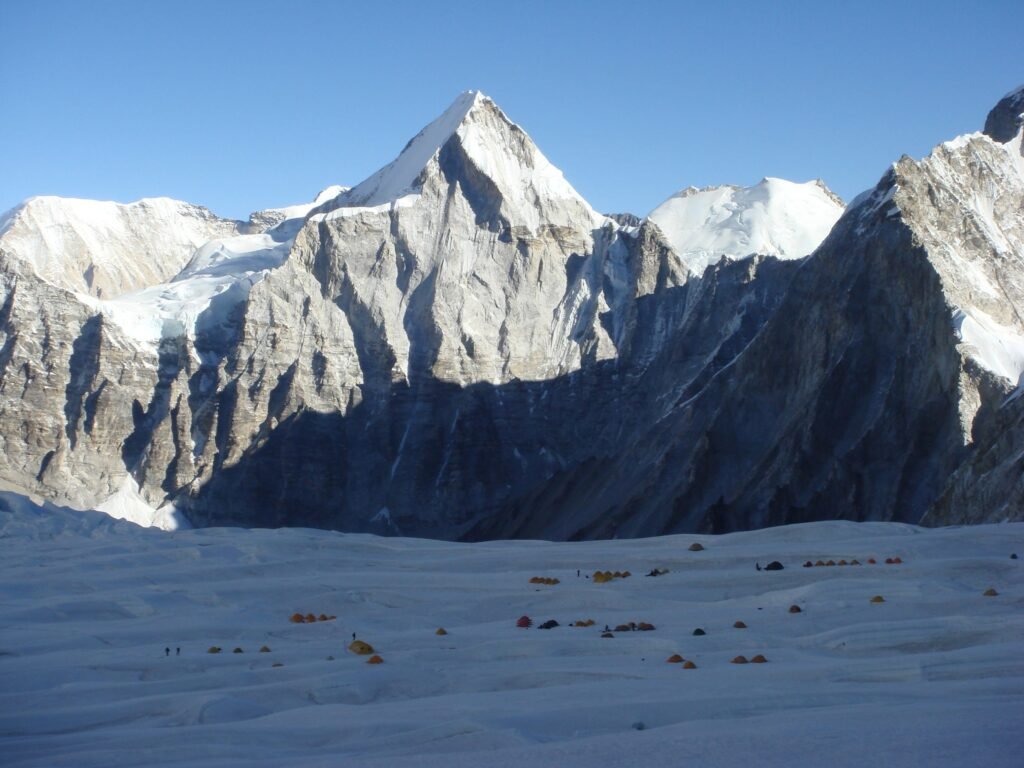
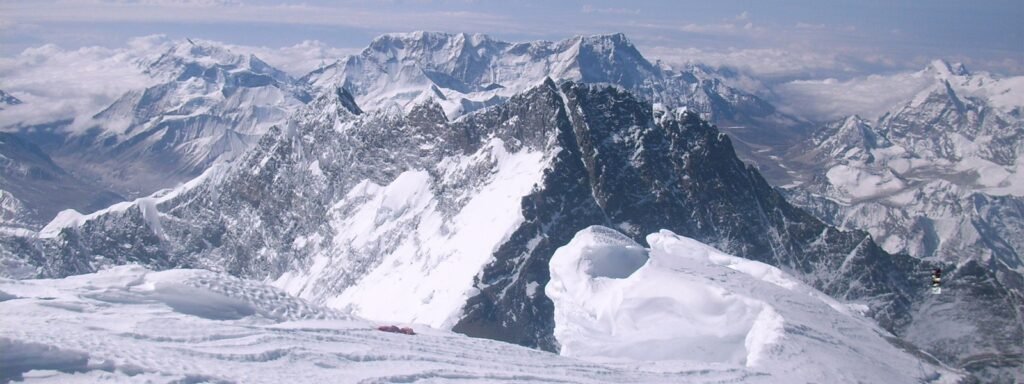
The South Col is a high mountain pass located between Mount Everest and Lhotse, the world’s highest and fourth-highest peaks. Due to constant high winds, the col remains largely free of heavy snow accumulation. Since 1950, after Tibet was closed to foreign expeditions, most Everest climbers have approached the mountain from Nepal via the Southeast Ridge, passing through the South Col rather than the North Col.
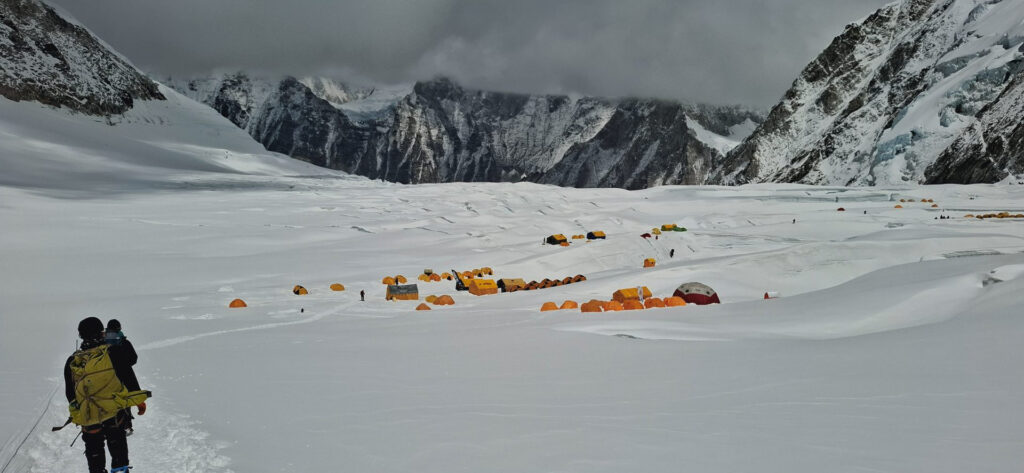
For climbers ascending Everest from the Nepal side, the South Col serves as the location of the final high camp, commonly known as Camp IV, before the summit push. This camp is positioned at extreme altitude and plays a critical role in summit attempts.
The South Col was first reached on 12 May 1952 by Swiss climbers Aubert, Lambert, and Flory during Edouard Wyss-Dunant’s Swiss Mount Everest Expedition, although the team did not succeed in reaching the summit. In 1953, during the historic first successful ascent of Mount Everest, Wilfrid Noyce and Sherpa Annullu became the first members of the British expedition to reach the South Col, as noted by expedition leader John Hunt.
Trip Info
-
Hotel/Tea house/Camping
-
Autumn - Spring
-
Fly/ Car/ Jeep/ Tourist bus
-
8848.86m
Overview
The South Col of Mount Everest is a high mountain pass located between Mount Everest and Lhotse, the world’s highest and fourth-highest peaks. The area is regularly exposed to strong winds, which prevent heavy snow from accumulating. Since 1950, after Tibet was closed to foreign expeditions, most climbers have approached Everest from Nepal using the Southeast Ridge route through the South Col rather than the North Col. For expeditions climbing from the Nepal side, the South Col serves as the site of the final high camp, commonly known as Camp IV, before the summit attempt.
Trip Highlights
- Expedition Name: Mount Everest Expedition
- Experienced as well as already attempt several peaks above 7000 m to 8000 meters)
- Hotels in Kathmandu: Standard, Budget or Luxury Star Hotel as per your requirements
- All the Nights’ Accommodation: Mountains Lodges (Guest House) and Comfortable Tented Camp at Base Camp, Camp (I) , Camp (II), Camp (III) and Camp (IV) before summit
- Transportation: Land transportation (Car, Van, Local bus, Tourist Bus) or Private Jeep as per Guests required.
- Attractions: you will have an Amazing view of Everest is the Highest mountain in the world at 8848 meters above sea level. Mount Everest is known as ‘Sagarmatha’ in Nepali language the meaning “Peak of Heaven” and Chomolungma in Tibetan language which means “Goddess Mother of the World” also several beautiful villages, waterfalls, River, nature & culture .
- Location: Sagarmatha National Park.
- Everest Expedition Permit: Mount Everest Expedition Climbing permit normal route per person USD 11000 (Eleven Thousands American dollars)
- Grade: Moderate & Technical climbing.
- Best Season: Spring Only (April to end of May) 2 months.
- Walking hours: per day 5 to 6 hours .
- Point of entry into the Park: Jorsalle.
- Point of Exit into the Park: Jorsalle.
- Group size: 2 to 14 members or (we can organize solo travelers private group & Join group as well) Bigger group could have discount rates so ask the expert properly.
- Minimum Altitude: Phakding 2610 Meters
- Maximum Altitude: Mount 8848 Meters
- Duration: 65 Days
Itinerary
Upon arrival at Tribhuvan International Airport in Kathmandu, you will be warmly welcomed by our representative and transferred to your hotel. After check-in, take time to rest and recover from your journey. If time permits, you may explore the lively streets of Thamel or enjoy a traditional Nepali dinner. An evening briefing will be held to discuss the trip plan and answer any questions. Overnight stay in Kathmandu.
Today is dedicated to expedition preparation and official formalities. You will attend required briefings at the Department of Tourism, complete permit procedures, and finalize documentation. The rest of the day is used to check and organize climbing gear, meet your expedition team, and review safety plans. In the evening, enjoy a final briefing with the expedition leader. Overnight stay in Kathmandu.
Early in the morning, take a scenic flight from Kathmandu to Lukla, offering breathtaking views of the Himalayan range. Upon arrival at Lukla, meet the trekking crew and begin the trek toward Phakding. The trail descends gently through Sherpa villages, prayer flags, and lush landscapes alongside the Dudh Koshi River. After a comfortable walk, reach Phakding and settle into a teahouse for the night. Overnight stay in Phakding.
After breakfast, begin the trek along the banks of the Dudh Koshi River, crossing several suspension bridges and passing through charming Sherpa villages. The trail gradually ascends through pine forests and enters Sagarmatha National Park at Monjo, where permits are checked. A challenging uphill climb follows, leading to the vibrant mountain town of Namche Bazaar, the gateway to Everest. Enjoy your first views of Everest and surrounding peaks. Overnight stay in Namche Bazaar.
Today is reserved for rest and acclimatization to help your body adjust to the increasing altitude. You may take a short hike to nearby viewpoints such as the Everest View Hotel or Khumjung village for panoramic views of Everest, Lhotse, and Ama Dablam. The rest of the day can be spent exploring Namche Bazaar, visiting local markets, bakeries, and museums. Overnight stay in Namche Bazaar.
After breakfast, leave Namche Bazaar and follow a scenic trail with stunning views of Everest, Ama Dablam, and Lhotse. The path gently descends to Phunki Tenga before climbing steadily through rhododendron forests. The trek concludes at Tyangboche, home to the famous Tyangboche Monastery, the spiritual center of the Khumbu region. In the evening, you may attend a prayer ceremony at the monastery. Overnight stay in Tyangboche.
Begin the day with a gradual descent through forests before crossing the Imja Khola. The trail then climbs steadily past Pangboche village, offering impressive views of Ama Dablam. As you continue higher, the landscape becomes more rugged and alpine. After a steady ascent, reach the high-altitude settlement of Dingboche, surrounded by stone-walled fields and towering Himalayan peaks. Overnight stay in Dingboche.
Today is set aside for rest and acclimatization to allow your body to adapt to the high altitude. You may take a short hike to nearby viewpoints such as Nagarjun Hill or Chhukung Valley for excellent views of Lhotse, Makalu, and Ama Dablam. The afternoon is free to relax, hydrate, and prepare for higher elevations ahead. Overnight stay in Dingboche.
After breakfast, begin a steady trek through the scenic Imja Valley. The trail gradually ascends past the memorials of fallen climbers, a somber reminder of Everest’s challenges. Enjoy panoramic views of Thukla and the surrounding peaks as you continue toward Lobuche. Upon arrival, settle into your teahouse and rest, preparing for the higher-altitude trek to come. Overnight stay in Lobuche.
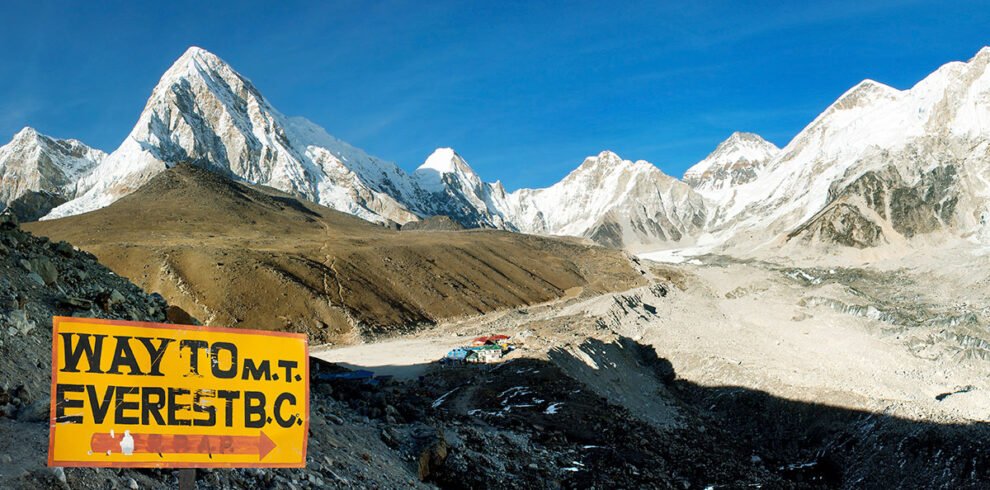
After breakfast, continue trekking along the rocky trail toward Gorakshep, the final stop before Everest Base Camp. The trail passes rugged terrain and offers spectacular views of Pumori, Lingtren, and Khumbu Glacier. Arrive in Gorakshep, where you’ll settle into your teahouse and rest, preparing for tomorrow’s climb to Everest Base Camp. Overnight stay in Gorakshep.
Start early in the morning for a short but steep hike to Kala Patthar, the famous viewpoint offering panoramic views of Mount Everest, Nuptse, and Pumori. Spend time at the summit soaking in the breathtaking scenery and taking photos. After descending, return to Gorakshep for rest and lunch. The afternoon can be used to relax and prepare for the Everest Base Camp trek tomorrow. Overnight stay in Gorakshep.
Today is the culmination of your expedition—the summit push. Starting from the high camp (Camp IV) on the South Col, climbers begin the ascent in the early hours, navigating the challenging Southeast Ridge. The climb passes key landmarks such as the Balcony, South Summit, and the Hillary Step before reaching the top of the world at 8,848.86 meters. After celebrating the summit and taking in the unparalleled views, begin the careful descent back to Camp IV for rest. This day is extremely demanding and requires careful acclimatization, preparation, and support from Sherpas. Overnight stay at Camp IV or nearby camp depending on conditions.
After the summit and initial descent from the South Col, the focus shifts to safely returning to lower altitudes while giving your body sufficient time to recover from extreme high-altitude exertion. The return period is crucial for preventing altitude-related issues and ensuring a smooth end to the expedition.
- Descent from High Camps: Begin by descending from Camp IV (South Col) or the last high camp to Gorakshep (5,170m) or Lobuche (4,960m), retracing the ascent route. Take frequent breaks to rest, hydrate, and adjust to decreasing altitudes.
- Trek through Khumbu Valley: Continue the trek back through Dingboche (4,350m), Pangboche, and Tyangboche, observing the Himalayan scenery and visiting Sherpa villages along the way. This descent allows for gradual recovery and reflection on the journey.
- Namche Bazaar Stop: Arrive in Namche Bazaar (3,440m), the main town in the Khumbu region, where you can rest, enjoy local markets, and prepare for the lower-altitude portion of the trek.
- Final Trek to Lukla: Continue down to Lukla (2,860m), completing the return trek. Here, the team can celebrate the expedition’s success, organize gear, and prepare for the flight to Kathmandu.
- Arrival in Kathmandu: Fly from Lukla to Kathmandu (1,400m). Upon arrival, complete any remaining formalities with the trekking agency and the Department of Tourism, pack personal belongings, and rest after the long expedition. Use this time to reflect on the achievement, review photographs, and celebrate the successful climb.
After breakfast, begin the descent from Dingboche through scenic trails lined with rhododendron and pine forests. Cross the Imja Khola and continue past Pangboche village, enjoying stunning views of Ama Dablam and surrounding peaks. Arrive in Tengboche, home to the famous Tengboche Monastery, and take time to visit this spiritual center of the Khumbu region. Overnight stay in Tengboche.
After breakfast, continue descending through the Khumbu Valley, passing through scenic forests and charming Sherpa villages. Cross suspension bridges over the Dudh Koshi River and enjoy the surrounding Himalayan views along the way. Arrive in Namche Bazaar, the vibrant market town and gateway to the Everest region, where you can rest, explore local shops, and interact with the friendly Sherpa community. Overnight stay in Namche Bazaar.
After breakfast, begin the final leg of your trek, descending from Namche Bazaar through the scenic Dudh Koshi Valley. Pass through Sherpa villages, pine forests, and suspension bridges while enjoying the last views of the towering Himalayan peaks. Arrive in Lukla, where the trekking route concludes. Take time to relax, celebrate the completion of the expedition, and prepare for the flight back to Kathmandu the following day. Overnight stay in Lukla.
Take an early morning flight from Lukla back to Kathmandu, enjoying spectacular aerial views of the Himalayan peaks and valleys one last time. Upon arrival, transfer to your hotel for rest and relaxation. The rest of the day is free to explore Kathmandu, shop for souvenirs, or reflect on your incredible Everest expedition journey. Overnight stay in Kathmandu.
Enjoy a well-deserved leisure day in Kathmandu after your Everest expedition. Explore the vibrant streets of Thamel, shop for souvenirs, trekking gear, and local handicrafts, or relax at your hotel. This day offers a chance to soak in the culture, sample traditional Nepali cuisine, and reflect on the incredible journey you’ve completed. Overnight stay in Kathmandu.
Spend a relaxing day in Kathmandu after your Everest expedition. Explore the bustling streets of Thamel, visit local markets, and shop for souvenirs, handicrafts, or trekking gear. Alternatively, you can enjoy a quiet day at your hotel, reflecting on your journey and enjoying Nepali cuisine. This day allows time to unwind and prepare for your departure. Overnight stay in Kathmandu.
On the final day of your Everest expedition, you will be transferred from your hotel to Tribhuvan International Airport in Kathmandu for your onward journey home. Take with you unforgettable memories, stunning photographs, and the pride of having completed an extraordinary adventure. This marks the conclusion of your Everest expedition.
Includes/Excludes
Cost Includes
- Arrival and departure transfer services to and from both Domestic and International flights as per the itinerary.
- 3 Nights Yak and Yeti or similar hotels accommodation in Kathmandu on B/B basis.
- Experienced and government-licensed high altitude trekking guide during the trekking and climbing period.
- Schedule Flight Tickets for Kathmandu-Lukla-Kathmandu sector to all climbing member, Sherpa guide, liaison officer and kitchen staff.
- All trekking and mountaineering equipment like; kitchen tent, stores tent, dining tents, toilet tents, tables, chairs, and cooking utensils for advance Base Camp and camp two.
- Common climbing equipment (necessary fixed and main rope, ice bars, ice screws, snow bar etc)
- Services of cook and kitchen boy at Base Camp and cook at Camp 2
- 3 meals a day (Breakfasts, Lunch and Dinners with tea/ coffee) in available tea house/hotel/lodge during the trekking
- 3 fresh meals a day (Breakfasts, Lunch and Dinners) will be serve at base camp, and camp two.
- All food and fuel for Base Camp and higher camps during expedition for both members and crews.
- Per person 60kg baggage allowance during trekking-up carrying by porter or Yak to climbing the Mt. Everest.
- Daily Weather Report Services from Seattle based
- Trekking Permit (Everest National Park entry fee)
- khumbu pasang lhamu rural municipality.
- Expedition Royalty and climbing permit of Nepal Government to climb Mt. Everest (8848M).
- Nepalese Government Royalty and fees;
- One Experienced, Trained, Government Licensed, and 03 Times Everest Summiteers Climbing/expedition Guide (Sherpa) per client.
- All wages, equipment, medical and accidental Insurances for all involved staffs in trekking and expedition.
- Medical consultation services at the base camp with the HRA clinic at the base camp.
- Equipment allowances and wages for Climbing Sherpa’s, cooks, kitchen boys.
- Equipment allowances and wages for Government Liaison Officer.
- First Aid medical kits for the Group and the staffs.
- Satellite phone carrying by Guide for communication and available for members with the cost of US$ 3 per minute call.
- Appropriate food for high altitude and all climbing crew at base camp and above as required.
- Required fixed and dynamic rope during climbing period.
- Heater will be provided at base camp for heating the dining room.
- Emergency Oxygen, mask and regulator provided on requirement of guest with appropriate charge
- Each expedition member will have an individual tent available in the ABC.
- Solar panel for light and battery charger.
- All tents for camp 1, 2, 3 and 4 for members and staff.
- Ice fall charges by Sagarmatha Pollution Control Committee.
- Gamow Bags (Portable Altitude Chamber).
- 7 Bottles (28L) of Poisk Oxygen will be provided each members (we use Poisk brands of the Oxygen)
- Latest model of Summit or Top out system mask and regulators
- Sherpa's tents, food for climbing, and insurance for staff
- Helicopter rescue insurance for high altitude climbing Sherpa guide, cook and staff.
- Free assistance service for Cargo clearance and Duties.
- Fresh cooked food and kitchen will be provided at camp two.
- Trekking and Climbing map of the Mount Everest.
- EPI Cooking gas, stove will be provided in camp one, three and south col for cooking food, boiling water.
- Generator will be providing for back- up of lighting power and charging electronic tools.
- Transportation of food supply to Base Camp from Kathmandu (Cargo to Lukla and then by porter/Yaks to base camp)
- Our service charge and Government Taxes levied in Nepal.
- Complete pre-departure information
- Flight ticket reconfirmation
- visa extension procedure services (if necessary)
- Farewell Dinner in a typical Nepali restaurant with domestic culture show in Kathmandu.
Cost Excludes
- Lunch and Dinner during your stay in Kathmandu (except for the farewell dinner)
- Any packed food/snacks, aerated drinks, energy drinks, mineral water, alcohol, cigarettes, chocolates, nutria-bars during the trekking.
- Items of personal nature, Laundry Expenses, Tips.
- Any extra expenses arising out of various/unforeseen situations like natural calamities, landslides, political disturbances, strikes, changes in Government regulations, etc.
- Extra transportation then display in itinerary program.
- Any additional staff other than specified.
- Rescue, Repatriation, Medicines, Medical Tests and Hospitalization expenses.
- Medical Insurance and emergency rescue evacuation if required.
- Travel Insurance and helicopter rescue.
- Wallie-talkies & Filming permit (if special camera or walkies-talkies).
- Personal climbing gears;
- Expenses incurred towards usage of landlines, mobiles, walkies-talkies or satellite phone And Internet expenses
- Clothing, Packing Items or Bags, Personal Medical Kit, Camera/Video Fees or Trekking Gears
- Nepal custom duty for import of expedition goods.
- Summit bonus for climbing Sherpa Guides as per Mountaineering Association rules. Minimum US$ 1500.00 per climbing Sherpa guide.
- Tips and gifts for base camp and high altitude trekking and climbing staff are mendetary.
- Airfare of international flights.
- Nepal entry visa fee (Visa issuance on arrival in Kathmandu)
- Any extra services or products or offers or activities which are not mentioned in the itinerary.
- Any other item not included in “COST INCLUDES” section.
FAQs
The Everest Expedition South Col route is the classic Nepal-side climbing route to the summit of Mount Everest. The expedition approaches Everest through the Khumbu region and progresses through the Khumbu Icefall, Western Cwm, Lhotse Face and South Col before the final summit climb.
Mount Everest, known as Sagarmatha in Nepal, has an official elevation of 8,848.86 meters (29,031.69 feet) above sea level. Nepal's official tourism statistics use 8,848.86m for Everest.
The South Col is the high-altitude pass between Mount Everest and Lhotse and serves as the principal high camp area for climbers attempting Everest from Nepal. Lhotse is directly connected to Everest by the South Col.
The expedition is extremely challenging and requires advanced mountaineering skills, strong physical conditioning, high-altitude experience and the ability to operate safely in severe Himalayan conditions. Nepal Tourism Board describes major Himalayan expeditions as requiring a high level of commitment and organizational ability.
Spring, particularly April and May, is the principal climbing season for Everest from Nepal because conditions at high altitude are generally more favorable before the monsoon. Autumn is another recognized mountaineering season in Nepal, although conditions vary by mountain and altitude.
A complete Everest expedition normally takes several weeks, because climbers need time for trekking to Base Camp, acclimatization rotations, establishing higher camps, waiting for suitable weather and making the summit attempt. The exact duration depends on the expedition itinerary, weather and acclimatization strategy.
The Nepal-side route generally involves Everest Base Camp and progressively higher camps, including camps through the Western Cwm and Lhotse Face, with Camp IV at or near the South Col before the summit push. Exact camp locations and expedition logistics can vary according to conditions.
The classic route travels through the Khumbu Valley → Everest Base Camp → Khumbu Icefall → Western Cwm → Lhotse Face → South Col → Southeast Ridge → Everest summit. Lhotse and Everest are connected by the South Col.
Yes. Mount Everest is an expedition peak under Nepal's mountaineering regulations, and climbers must obtain the required authorization and permits through the appropriate Nepal government procedures. Nepal Tourism Board states that expeditions to peaks above 6,500m fall under the Ministry of Tourism's authority.
The total cost depends on the expedition operator, permit and royalty costs, guide and Sherpa support, oxygen, equipment, logistics, accommodation, transportation, insurance and expedition duration. There is no single universal Everest expedition price, so the package should clearly state what is included and excluded.
Preparation should include endurance training, cardiovascular conditioning, strength training, uphill hiking and progressive exposure to altitude. Climbers should also develop technical skills appropriate for steep snow and ice terrain and be prepared for prolonged physical effort at extreme altitude.
Previous experience on high mountains is strongly recommended. Everest is not an introductory climbing objective; climbers need appropriate technical skills, altitude experience, physical preparation and the ability to make safe decisions in a demanding environment.
Acclimatization is normally achieved through gradual ascent and planned rotations between lower and higher camps, allowing the body time to adapt to decreasing oxygen availability. Expedition schedules include acclimatization days and rotations, but the exact strategy depends on the climber, team and mountain conditions.
particularly at extreme altitude, although individual strategies differ. Oxygen systems may include cylinders, regulators, masks and other equipment, and climbers should understand the operator's oxygen policy before booking.
An Everest expedition requires specialized high-altitude mountaineering equipment, which can include crampons, mountaineering boots, ice axe, harness, helmet, ascender, carabiners, climbing ropes, high-altitude clothing, gloves, goggles and suitable sleeping equipment. The exact equipment list should be confirmed with the expedition operator.
Experienced Sherpa mountain professionals can provide critical expedition support, including route logistics, load carrying, camp support, rope-fixing operations and high-altitude assistance, depending on their role and the expedition structure. A reputable operator should clearly explain the experience and responsibilities of its Sherpa team.
Major hazards include extreme altitude, low oxygen, severe weather, avalanches, falling ice, crevasses, high winds, extreme cold, exhaustion and altitude-related illness. The Khumbu Icefall and high-altitude sections require particularly careful risk management.
Everest should not be treated as a beginner's climbing objective. Prospective climbers should have substantial mountaineering preparation and experience, appropriate technical skills and excellent physical conditioning before considering an Everest expedition.
Compare the operator's government authorization, expedition leadership, Sherpa experience, acclimatization schedule, oxygen strategy, emergency procedures, rescue arrangements, communication systems, equipment, inclusions, exclusions and previous expedition record. Avoid choosing solely on the lowest advertised price.
The South Col route from Nepal is the classic and historically established approach to Everest's summit. It provides a structured expedition progression through Everest Base Camp, the Khumbu Icefall, Western Cwm, Lhotse Face and South Col before the summit attempt