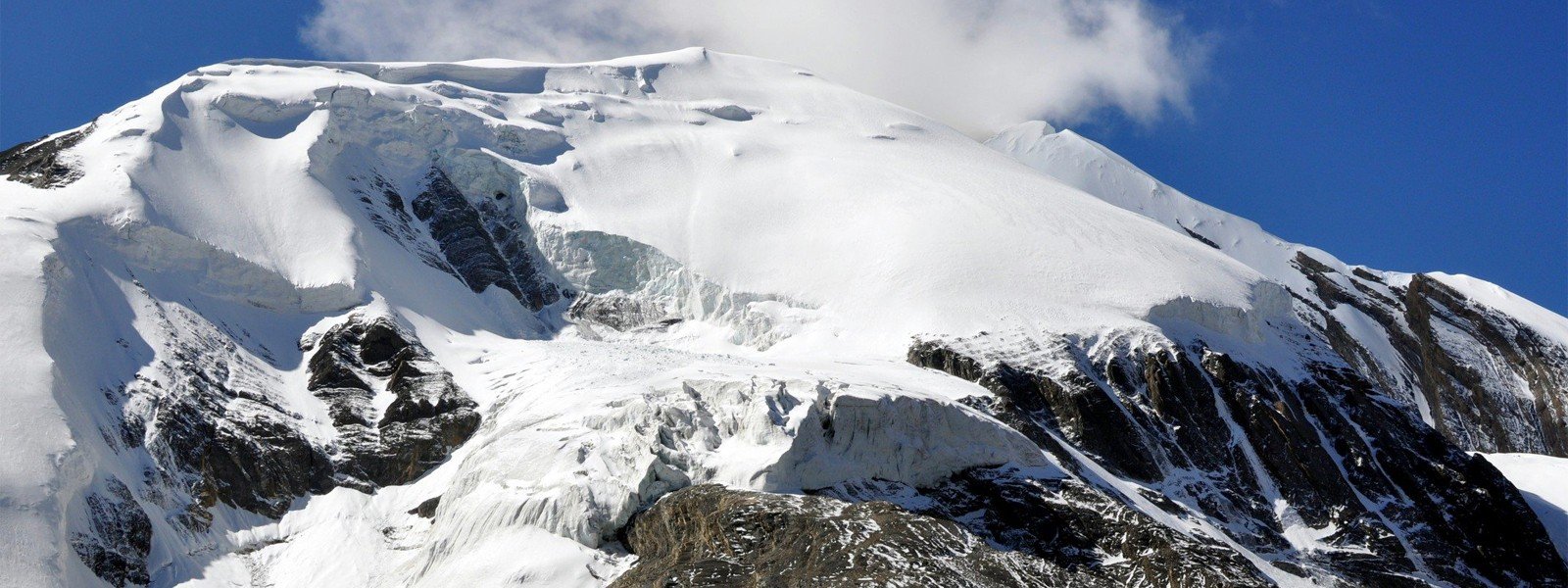
Thorong Peak Climbing: An Unforgettable 6,144m Himalayan Adventure in Nepal
Thorong Peak Climbing (6,144m) is a popular and stunning adventure located between the Annapurna and Dhaulagiri mountain ranges. This climb offers breathtaking views of Dhaulagiri (8,167m), Nilgiri (7,061m), the Annapurna range, Tilicho Peak, as well as the Mustang Valley and sacred site of Muktinath.
The journey not only promises mountain beauty but also a rich blend of natural and cultural experiences. Along the route, you’ll pass charming villages, terraced rice fields, waterfalls, and welcoming guesthouses. You’ll also encounter diverse ethnic communities, including the Gurung, Magar, and Tibetan people—reflecting the region’s strong connection to Tibetan heritage and history.
Trip Info
-
Hotel/Lodge/Tea House during the trek
-
All Time
-
6144m.
-
Fly/Car/Jeep/ Bus
-
5/6 hours
Overview
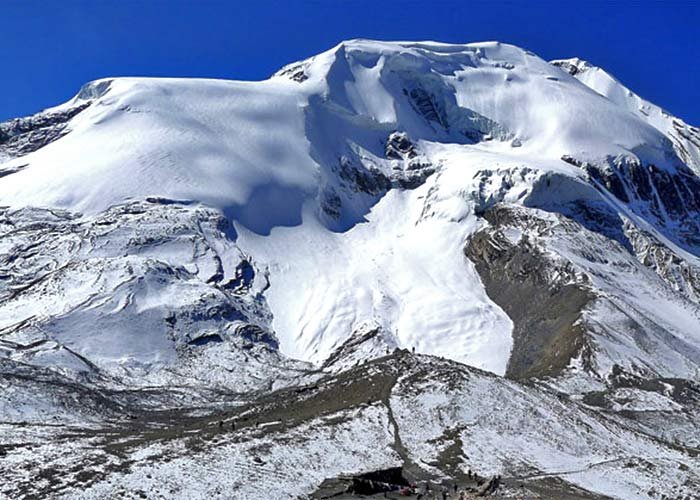
Thorong Peak Climbing (6,144 m) is a fabulous opportunity to make you your first 6,000. The Thorong Peak climbing is not technically difficult but physically tiring. The day will be long but beautiful. The most slopes are 30 to 40 °. This trekking peak is a high mountain course during which you will climb a glacier. This trekking peak requires a very good physical condition.
Trip Highlights
- Trekking through low sub-tropic forests to high alpine rocky terrain, constant views of the Annapurna Massif & some of the world’s tallest peaks - the world’s tallest peaks: Annapurna 1, Manaslu and Dhaulagiri.
- Stunning view from the summit of Thorong peak including Annapurna,Dhaulagiri and Nilgiri ranges.
- Step back in time and see historic architecturally unique villages, Buddhist culture & follow in the footsteps of the ancient Trans-Himalayan caravan route.
- Trek through the Kali Gandaki Gorge-the world’s deepest george.
- Trek through high alpine Thorong La Pass (5146m).
- Trekking through dense rhododendron & magnolia forests (especially in March)
Itinerary
Upon your arrival at Tribhuvan International Airport in Kathmandu, you will be greeted by our representative and transferred to your hotel. After check-in, you can relax or explore the bustling streets of Thamel. In the evening, there will be a briefing about the Thorong Peak Climbing itinerary and final preparations. Overnight stay at a hotel in Kathmandu.
During the free day in Kathmandu, you may have a chance to visit the heritage site of Kathmandu Valley, followed by a pre-trip departure meeting regarding upcoming trekking peak climbing, where you meet the trek guide and other team members. They will brief you about the team formation, equipment, and nature of peak climbing and other necessary information
We will begin our trips this morning after breakfast with a drive through the picturesque Nepalese countryside to Bhulbule (850m). Afterward, we will again drive to Jagat (a small hill in the footsteps of Annapurna and Manaslu) by jeep (Full-board accommodation at a tea house).
After breakfast, we’ll take a one-and-a-half-hour rocky trail trek to Chamje hamlet, a small rural population surrounded by bamboo bushes with a primary school. Our adventure continues with a suspension bridge across the Marshyangdi River just after leaving Chamje.
You will view a waterfall, rocky hills, trails, and a little teashop before entering the Manang district soon before Tal village. This is a lovely community on the riverbank with a stunning waterfall view. You’ll cross the river and continue trekking through the cliffs above the river to Dharapani village, where we’ll spend the night. (On a full-board basis, spend the night at a tea house.).
Bagarchhap is about an hour’s walk from Dharapani. This lovely village may see the first glimpse of Mt. Annapurna II. On this day, you will pass through a few steep forested landscapes and multiple landslides; nonetheless, keep your eyes out for some spectacular views of prominent Himalayan peaks.
On your way to Chame on this day, you’ll pass through some traditional Tibetan villages (2670m). Chame is Manang’s district headquarters and one of the most picturesque Himalayan settlements, with near views of Mt. Lamjung and Annapurna II. (Full-board accommodation at a tea house).
Another beautiful stroll through a narrow, steep trail that follows the river bank will lead you to the settlement of Bratang, where you can stop for tea. After that, we followed the forested walk and rough trails for an hour before crossing the suspension bridge and arriving at Dhukur Pokhari for lunch.
This little village will see the first view of Pisang Peak and the surrounding Himalayan peaks. After lunch, we’ll walk for an hour to reach our next destination, Pisang hamlet. (Full-board accommodation at a tea house).
Today we travel through the drier upper route, which is shielded from the monsoon’s full force by the Annapurna Range. For a portion of the year, the people of this region herd yaks and grow vegetables.
The trail continues from Mungji to adjacent Manang, passing through the scenic but largely hidden settlement of Braga (3475m).
Manang, we spent the day acclimating. We spent the entire day doing beautiful day hikes and marveling at the breathtaking vistas around the village; daytime is the optimum time to gain altitude.
The charming community of roughly 500 flat-roofed dwellings is nestled amid some outstanding landscapes – Annapurna II, Annapurna III (7555m), Gangapurna (7454m) to the south, Tilicho (7132m), and the Grand Barrier to the west, and Chulu West (6583m) and Chulu East (6059m) to the north. We return to our lodging and retire for the night at the end of the day. (Full-board accommodation at a tea house).
After a magnificent exploration of Manang village this morning, we started for Yak Kharka, leaving the route to Tilicho Lake on the left corner and continuing a short hike up to Yak Kharka, a little community nestled at the base of the mountain (4110m). We’ll climb gradually towards a small hill, then turn right behind it to reach Yak Kharka/Ledar (4,200m), where we’ll spend the night. Remind yourself that you can hike up to a small hill for a beautiful view of the surrounding mountains. (Full-board accommodation at a tea house).
Another short day with views from above takes you to Thorong Phedi’s pass for lunch. A small yet bustling community that caters to the requirements of hikers and climbers. It is located at the base of the Thorong-La, and the trails continue to ascend to the top of the Thorong-La. We trek for an hour after lunch to reach a high camp (4800m) for the night. (On a full board basis, spend the night at a tea house).
It takes 3-4 hours to trek from Thorong peak Phedi to Thorong peak base camp. When you get to Thorong peak base camp, you will have time to recover and prepare for the next day’s ascent. (Full-board accommodation in a tented camp).
Today is dedicated to preparing for the Thorong Peak summit. Your climbing guide will conduct a detailed training session on the use of climbing gear such as ropes, harnesses, ice axes, and crampons. You’ll also learn essential safety techniques and practice basic climbing skills on nearby terrain. This day ensures you’re physically and mentally ready for the ascent. Overnight stay at high camp or base camp, depending on the itinerary.
In the Early Morning, we start to Climb Thorong Peak Summit (6,144m) and trek back to Muktinath (3,800m). (Start to climb around 1:00 a.m., Thorong Peak Summit (6,144m) then trek back to Thorong La top, continue Trek back to Muktinath) Long and hard Day. (Full-board accommodation at a tea house).
Today, we wake up to the beautiful sounds of temple bells and traveled to the Muktinath Temple region, a well-known pilgrimage location. After breakfast, it’s a short walk down to Kagbeni. To Kagbeni, the trail drops through a stunning, arid environment. Kagbeni can be reached only by crossing the Kaligandaki River on both sides.
Perhaps you’ll have lunch in Kagbeni. After a few hours of walking from Kagbeni, we arrived in Jomsom, a large town and the administrative center of Mustang district. It has an airfield above the Kaligandaki River and is a critical settlement in the Kaligandaki area, connecting to Tibet via the ancient Trans-Himalayan Salt Trade route.
Today we will be taking a picturesque alpine trip to Pokhara, so we must gather our belongings and prepare. The aircraft passes between two high peaks, Mt. Annapurna (8091m) and Mt. Dhaulagiri (8167m), giving us the best views. We have a whole day in Pokhara to appreciate the natural beauty.
Visit the city’s highlights and the surrounding areas sightseeing tour of Pokhara Valley Like Fewa Lake Tal Barahi temple, etc.
Returning to Kathmandu entails a 7-hour trip through the Trisuli River and via numerous towns. You can spend your time relaxing or shopping for souvenirs to take home. In the evening, we will offer a goodbye dinner with cultural dance performances in a traditional restaurant to memorate your incredible journey.
Today is the last day of this vacation in Nepal; you are saying your goodbyes to the mountains as your tour in Nepal comes to a close today.
But exchange emails with your travel partners and organize your images. You can go shopping or sightseeing if you have extra time. Brotherhood Adventure will pick you up from your hotel around 3 hours before your planned flight.
Includes/Excludes
Includes
- Airport pick-up and drop-off in a private vehicle
- Teahouse/lodge accommodation during the trek
- All meals during the trek and climbing (breakfast, lunch, dinner)
- Domestic transportation (Kathmandu to trek starting point and return)
- Licensed and experienced English-speaking trekking and climbing guides
- TIMS card (Trekkers’ Information Management System)
- Government taxes and official service charges
Excludes
- International airfare and Nepal visa fees
- Travel insurance (must include high-altitude climbing and emergency evacuation)
- Personal climbing equipment (boots, down jacket, gloves, etc.)
- Meals in Kathmandu outside the itinerary
- Tips for guides and porters (optional but appreciated)
- Anything not mentioned in the "What’s Included" section
FAQs
Thorong Peak Climbing is a high-altitude mountaineering adventure in Nepal’s Annapurna region that combines trekking through the Annapurna Circuit with an ascent of Thorong Peak, which reaches approximately 6,144 meters (20,157 feet). The journey also includes the famous Thorong La Pass at 5,416 meters.
Thorong Peak stands at approximately 6,144 meters (20,157 feet) above sea level. Because of its altitude, proper acclimatization, physical preparation, and careful pacing are essential for a safe and successful ascent.
Thorong Peak Climbing is considered a challenging high-altitude climb rather than an ordinary trekking route. The difficulty comes from altitude, changing weather, steep and uneven terrain, and summit-day conditions. Basic mountaineering skills and familiarity with equipment such as crampons and an ice axe are recommended.
Advanced mountaineering experience is not necessarily required, but previous high-altitude trekking experience and good physical fitness are strongly recommended. Beginners should undertake the climb with an experienced guide and receive appropriate training in basic climbing techniques and equipment use.
A typical Thorong Peak Climbing itinerary takes around 16–18 days, although the exact duration depends on the chosen route, acclimatisation schedule, transportation, weather, and climbing conditions.
Spring (March to May) and autumn (September to November) are generally considered the best seasons for Thorong Peak Climbing because these periods usually provide more favorable trekking and climbing conditions, clearer mountain views, and more stable weather than the monsoon and winter periods.
The route generally follows the Annapurna Circuit through the Manang region before continuing toward Thorong Phedi and the Thorong Peak climbing section. The itinerary incorporates the high-altitude Thorong La area and can continue toward Muktinath and the lower Mustang region after the climbing phase. Exact routing varies by itinerary and current trail and mountain conditions.
Essential equipment can include mountaineering boots, crampons, an ice axe, climbing helmet, harness, ropes, warm layered clothing, insulated gloves, a down jacket, sleeping bag, sunglasses or glacier glasses, trekking poles, and a suitable backpack. The exact equipment requirement depends on current route and climbing conditions and should be confirmed with the climbing operator before departure.
The major challenges include high altitude, acclimatization, cold temperatures, rapidly changing Himalayan weather, long trekking days, steep terrain, and the physical demands of summit day. Altitude-related illness is an important concern, making gradual ascent, appropriate acclimatization, hydration, rest, and professional mountain guidance essential.
The cost of Thorong Peak Climbing varies according to itinerary length, group size, permits, guide and climbing staff, accommodation, meals, transportation, equipment, insurance, and included services. Travelers should compare the complete package inclusions rather than choosing an operator based only on the advertised price.